Batólito de Sintra
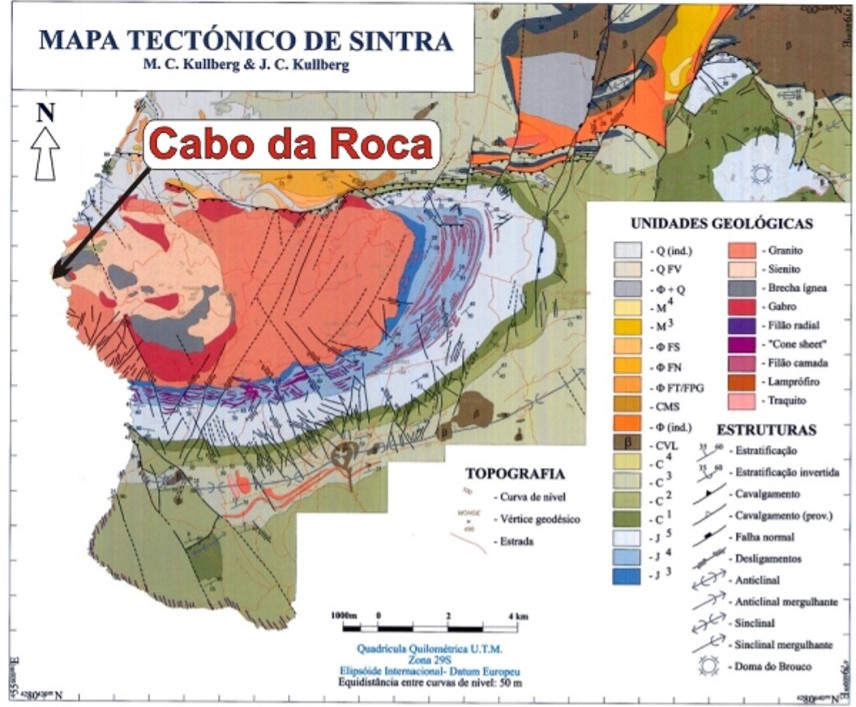
“Há aproximadamente 90 milhões de anos, durante o Cretáceo Superior, uma massa de magma ascendeu, empurrando para cima litologias calcárias jurássicas.
O batólito de Sintra, uma intrusão circular composta por um anel externo de gabro diorítico e um núcleo de gabro sienítico (ver mapa geológico), domina a morfologia da Serra de Sintra.
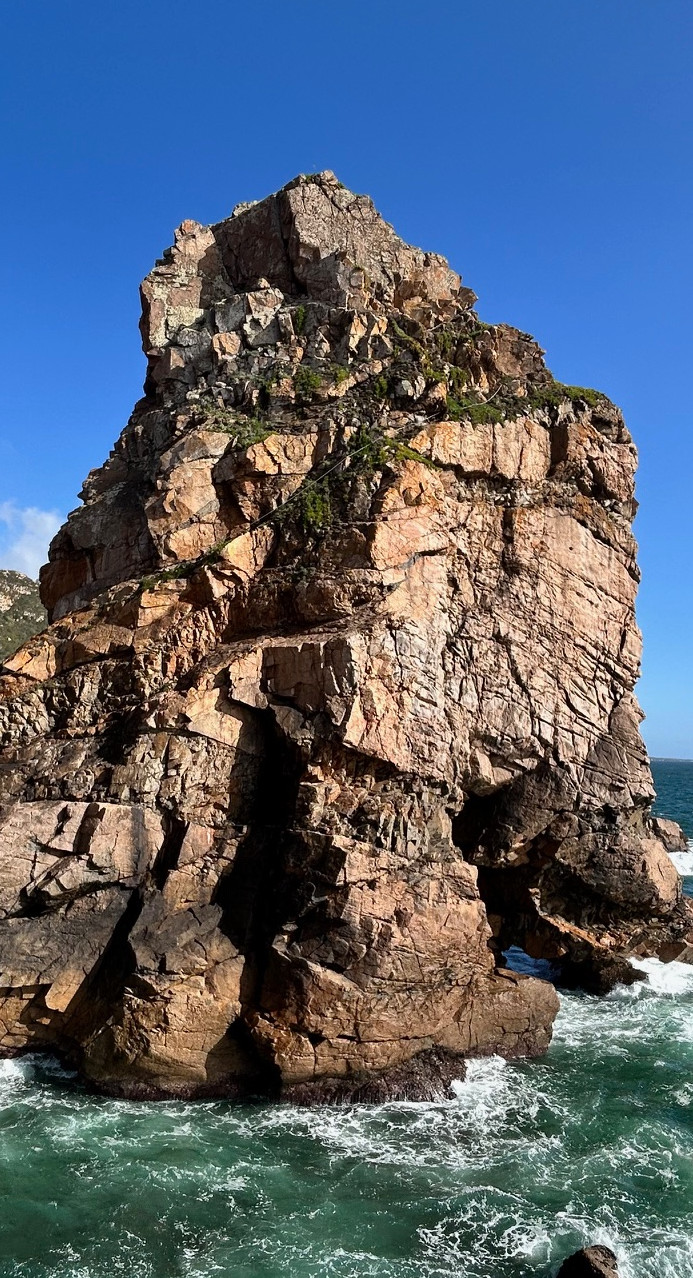
O Cabo da Roca está localizado aproximadamente no centro do núcleo de gabro sienítico (sienito é basicamente granito, mas com muito menos quartzo) e foi formado devido ao colapso de parte desse núcleo, dando origem a falésias verticais a 140 m acima do nível do mar.
Bibliografia: Kullberg, MC e Kullberg, JC, 2000. Tectónica da região de Sintra. In: Tectónica da região de Sintra e Arrábida. Mem. Geociências, Museu Nac. História. Univ. Lisboa, nº 2, 1-34.
Tipos de rochas ao longo do Cabo da Roca
Começando no norte, em Praia Grande, e indo para o sul, em direção a Praia da Ursa, encontramos calcário estratificado e margas com consistências variadas.
No ponto de contato com o Batólito de Sintra, na margem do rio na Praia da Ursa, encontramos mármores que podem ser escalados tanto na Parede das Duas Cores quanto na Ursa (pirâmide).
Seguindo para o sul, encontramos enseada após enseada de sienito, ora muito duro, ora muito deteriorado, intercaladas com veios de basalto. Um sienito que está sempre a soltar grãos, uma característica da rocha de Cabo da Roca.
Finalmente, no extremo sul, temos xisto nas placas dos Cinzentos, com o calcário reaparecendo na Praia do Guincho e no Cabo Raso.